
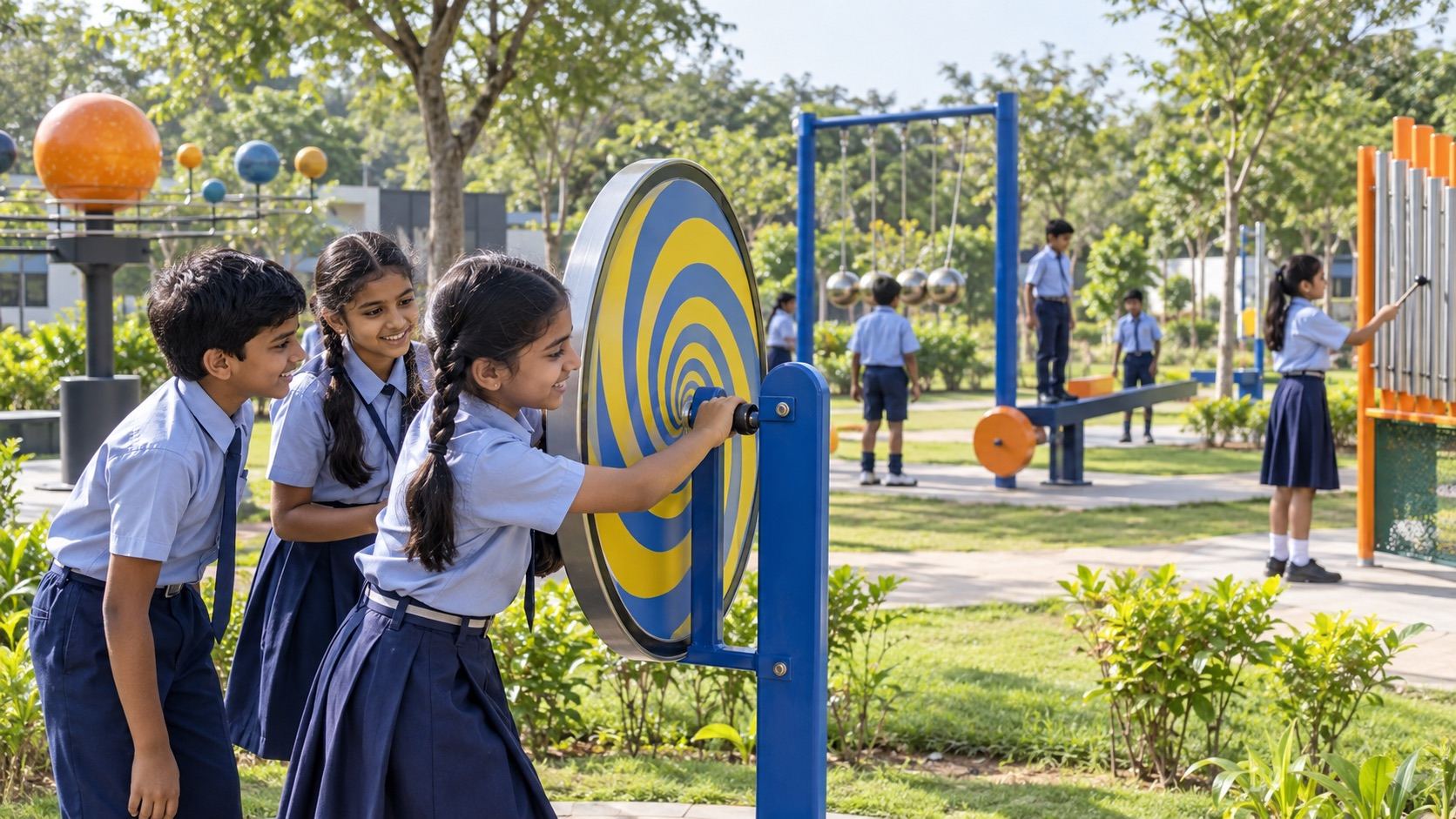
1. Who will use the park?
Define the age range, expected group size and whether the space will support regular classes, clubs, visitors or community programmes.
2. What should learners be able to explore?
Select concept groups around the intended experience—such as motion, sound, light, energy, mathematics and engineering—rather than choosing exhibits only by appearance.
3. How much usable space is available?
Measure the site, circulation paths, slopes, shade, drainage, utilities and safe distances between exhibits. The usable area may be smaller than the total area.
4. How will the park connect to teaching?
Prepare short facilitator prompts, grade-linked activity ideas and an annual use plan so the park supports learning after the opening day.
5. What must withstand local conditions?
Materials, finishes, foundations and moving parts should be selected around weather, frequency of use and the maintenance capacity of the institution.
6. Who owns maintenance and safety checks?
Name the person or team responsible for routine inspection, cleaning, reporting damage and coordinating repair or replacement.
7. What does successful use look like?
Decide what the institution wants to observe after installation: class visits, educator-led activities, learner projects, community use or another clearly defined outcome.